
Design & Development
From concept to production, engineered to build.
New Tech Metals Design & Development Group provides expert project management, mechanical engineering, product development, and cost-reduction analysis services that help manufacturers improve product performance, reduce production costs, and meet critical operational and budgetary objectives.
From initial concept through full-scale production, our experienced design and development teams deliver innovative, manufacturable solutions tailored to your product's function, performance requirements, and market demands. We specialize in Design for Manufacturability (DFM), helping customers optimize designs for efficient production, improved quality, and long-term reliability.
Our prototype development capabilities allow customers to test, validate, and refine products before production, reducing risk, improving performance, and controlling overall project costs. Whether developing new products or improving existing components and assemblies, we work closely with customers to identify opportunities for enhanced durability, increased efficiency, and lower manufacturing costs.
By combining practical engineering expertise with value engineering and manufacturing optimization strategies, we help organizations bring high-quality products to market faster and more cost-effectively.
Contact New Tech Metals today for a free quotation and consultation on your next project.
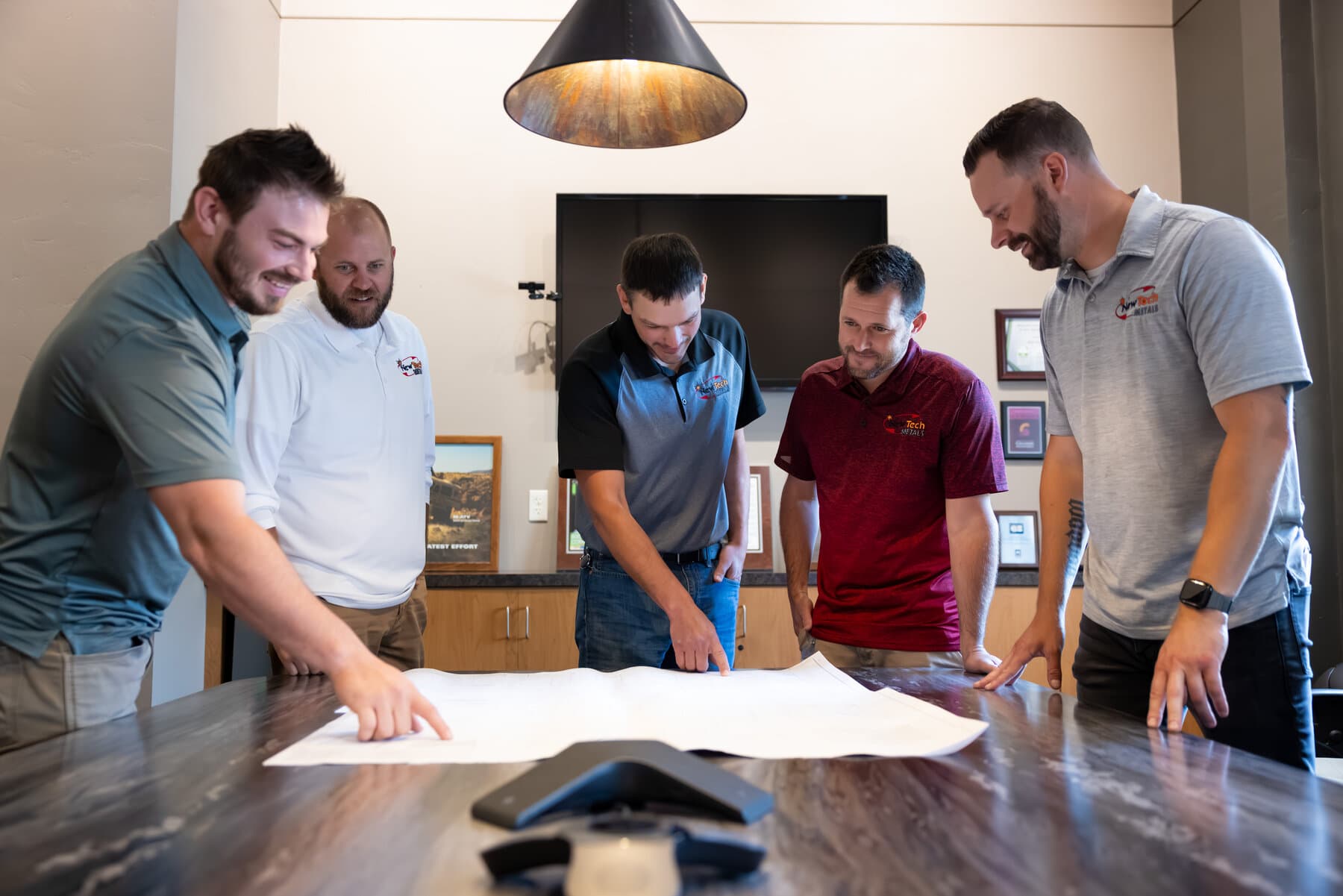
Design & Development in Action.

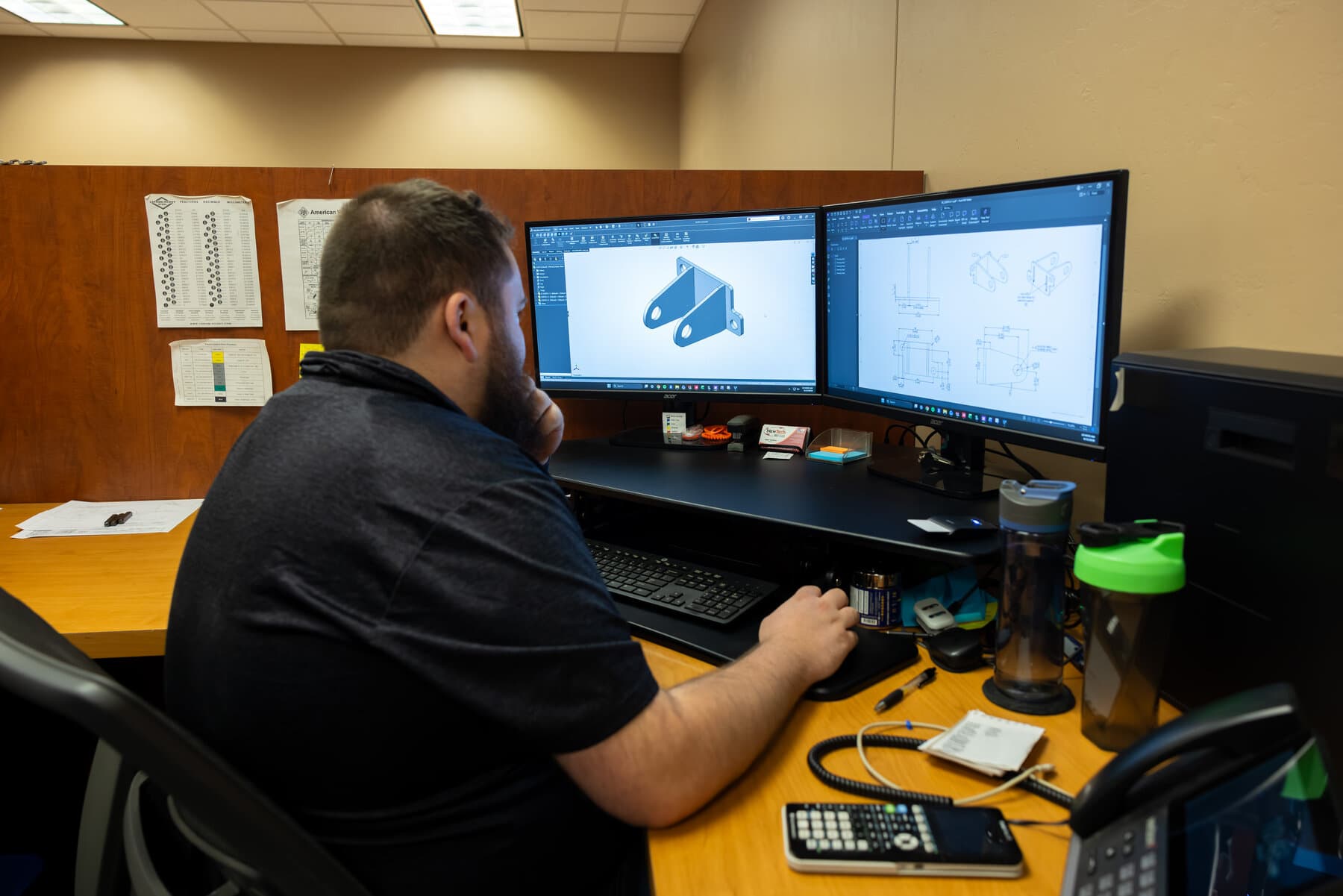

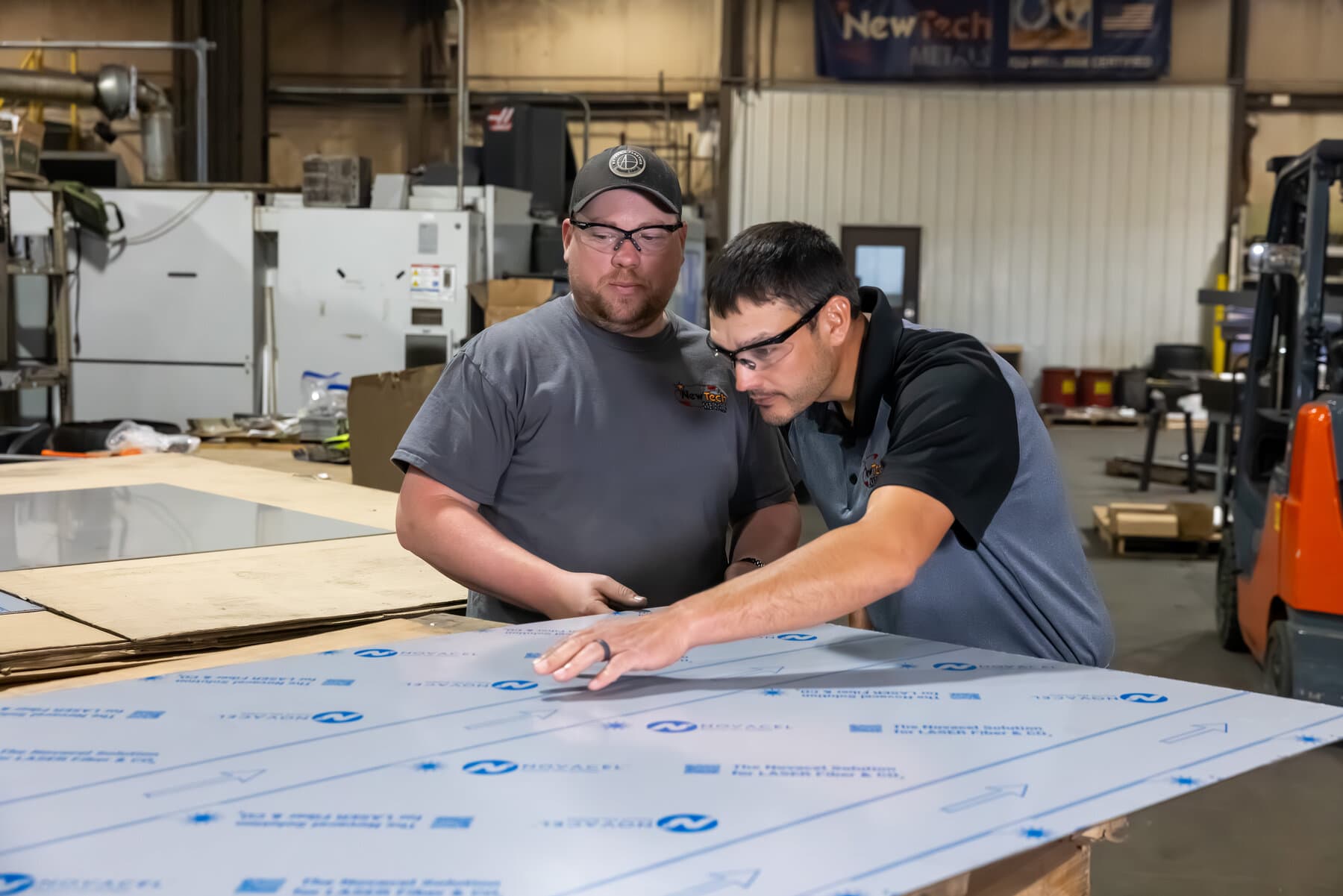
From concept to production.
- 01
Concept & Consultation
Customer brings a concept, a sketch, an existing drawing set, or a full TDP, plus performance targets, end-use environment, and any compliance flowdowns. NTM's design and development team meets to understand the part's function and constraints. The earlier NTM is brought in, the more cost and lead time the work can take out.
- 02
Design for Manufacturability
Engineering reviews the geometry against NTM's in-house cutting, forming, welding, machining, and assembly capability: material selection, bend radii, tolerances, joint and fastener access, finishing path, and cost drivers. Findings come back as actionable recommendations the customer can accept or revise.
- 03
Value Engineering & Drawings
Cost drivers are weighed against target unit cost and volume: part-count reduction, alternate alloys, hardware standardization, subassembly consolidation. Revised geometry is captured as production-ready drawings and native CAD with GD&T, datum schemes, weld symbols per AWS A2.4, and inspection callouts.
- 04
Prototype & Validate
Approved design moves to the floor for prototype fabrication through the same equipment that will run production, so the prototype reflects production reality. It is delivered for fit, function, and performance validation, and findings drive iteration before tooling or production quantities are committed.
- 05
Release to Production
Approved drawings, native CAD, bill of materials, material specifications, and a First Article Inspection plan flow into NTM's production and quality system. The same team that designed the part stays available to the floor, so there are no handoff gaps between design and production.
How we de-risk the design.
- Material SelectionRight alloy and grade for the load, environment, and end-use spec, not just the cheapest stock on hand.
- Geometry ValidationBend radii, minimum flange lengths, hole-to-edge distances, and weld access reviewed against shop capability.
- Tolerance StrategyTolerance only where function demands it. Loose tolerances elsewhere keep cost down without compromising the assembly.
- Joint & Fastener DesignWeldments reviewed for joint access and code requirements. Mechanical assemblies reviewed for fastener selection, access, and torque path.
- Finishing PathDeburring, graining, sandblasting, paint, powder coat, passivation, planned at design time, not after the part is built.
- Cost OptimizationPart consolidation, common stock sizes, reduced operation count, and standard hardware identified during DFM, not after a purchase order is received.
- Mild Steel
- High-Strength Steel Grades
- T1 Steel
- Stainless Steel
- Aluminum
- Food-Grade Stainless
Prototypes flow through the same equipment and material universe as production work, so what validates in development is what ships in production.
What we accept, what we deliver.
- ConceptHand sketches, whiteboard photos, functional descriptions, and competitor / legacy part teardown.
- Native CADSTEP and IGES are the preferred interchange formats. Native CAD assemblies preserve constraints and feature trees.
- DrawingsExisting 2D drawings, customer-controlled drawings, or supplier prints: PDF, DXF, or paper redlined.
- TDPTechnical Data Package: drawing tree, BOM, material callouts, inspection requirements, and contract flowdowns.
- SpecificationsPerformance specs, environmental specs, end-use specs, and any prime-contract flowdowns (ITAR, DFARS, AS9100, IATF).
- TargetsTarget unit cost, target volume, target lead-time, and any non-negotiable program constraints.
- DFM-Revised DrawingsCustomer drawings updated for manufacturability if necessary. Cost-drivers flagged if DFM finds areas of improvement. Iteration log accompanies every revision.
- Value-Engineered SpecsCost-down options scoped against target unit cost and target volume. Each option weighed for performance impact.
- Production-Ready GeometryNative CAD plus STEP and IGES exports dimensioned for NTM's in-house cutting / forming / welding / machining flow.
- Manufacturing Drawing PackDrawings with weld symbols per AWS A2.4, GD&T, inspection callouts, and material specs ready for the production floor and for incoming inspection.
- Cost-Optimized BOMBill of materials reflecting value-engineered substitutions if design exceptions were approved, hardware standardizations, and any subassembly consolidations.
- First-Article PlanFAI plan referenced into NTM's Quality system for release to production, closing the loop into PPAP / AS9102 documentation.
Deliverables map to NTM's Design & Development service: project management, mechanical engineering, cost-reduction analysis, and value engineering.
What to send with your RFQ.
A Design & Development RFQ often starts earlier than a production RFQ, sometimes before a CAD model exists. The clearer your concept, targets, and contract constraints up front, the faster NTM can scope DFM, prototype, and a path to production with a defensible quote.
Concept description, sketches, or CAD
Any form is workable: hand sketches, marker on a napkin, PDF drawings, or native CAD (STEP, IGES). Native CAD shortens the path to a prototype. Concept-only is fine; that is what this service is for.
Performance requirements
Load case, operating environment, expected service life, finish requirements, and any regulatory standards the part must meet. The more specific, the more useful the DFM review.
Materials preference or constraint
Mild steel, high-strength steel grades, T1 steel, stainless steel, aluminum, food-grade stainless. Note any disallowed materials and any required flowdowns (DFARS specialty metals, RoHS, REACH).
Target unit cost
A real number, even a range, is worth more than no number. Value engineering is bounded by the cost the part can carry at the target volume.
Target volume
First-article quantity vs. annual production quantity. Prototype-only, low-mid volume, or rolling production each drive a different DFM and material strategy.
Target lead time
First article need-by date and production start date if known. Tells us whether to optimize the prototype for speed or for production-equivalent processes.
Contract & compliance flowdowns
ITAR, DFARS specialty metals, AS9100D, NIST 800-171 / CMMC for defense. IATF 16949 / PPAP for automotive. Plus inspection-level requirements (First Article, CMM, material traceability).
Design & Development for Defense, Transportation, and M&E.
- Industry · 01
Defense
Concept-to-production engineering and DFM for U.S. and allied defense programs across land and naval applications: vehicle platforms, shipboard infrastructure, weapons support equipment, communications enclosures, electronics housings, and structural assemblies.
AS9100DITARDFARSView Defense→ - Industry · 02
Transportation
Design and first-article development for automotive, cargo trailers, fire apparatus, refuse vehicles, concrete mixers, and airport products: bodies, panels, enclosures, brackets, frames, guards, and subassemblies.
ISO 9001FMVSSNFPA 1900View Transportation→ - Industry · 03
Machine & Equipment Builders
Prototype and production engineering for paper converting, packaging equipment, drying and curing systems, commercial appliance, power equipment, and material handling programs.
ISO 9001View Machine & Equipment Builders→
Deeper reading on design and DFM.
What procurement engineers ask about design & development.
- FAQ · 01 / 09
Does NTM design from scratch, or only from existing drawings?
Both. NTM's Design & Development group is set up to work from a blank-sheet concept (function description, sketches, performance requirements) through to a release-to-production drawing pack, AND to take existing customer drawings and make them more manufacturable. Most engagements start somewhere in between, a concept plus a few reference drawings, and converge through DFM and value-engineering iterations.
- FAQ · 02 / 09
What is NTM's DFM review process?
Concept materials (sketches, drawings, or native CAD) come in. NTM engineering reviews the design against shop capability: material selection, geometry, tolerance strategy, joint and fastener design, finishing path, and cost drivers. Findings come back as actionable recommendations the customer can accept or revise before prototype fabrication begins.
- FAQ · 03 / 09
Can NTM modify existing drawings for manufacturability?
Yes. A common path is a customer brings drawings that work on paper but carry hidden cost or risk on the shop floor: tight inside radii, unnecessary tolerances, awkward weld access, multi-setup machining sequences. NTM's design group flags those features, proposes alternates inside the brief Materials list, and returns a DFM-revised drawing pack with the customer's sign-off captured at each iteration.
- FAQ · 04 / 09
Can NTM prototype before tooling for production?
Yes. That is a headline value of the Design & Development service. Prototypes are fabricated through the same equipment that will produce the production part, so the prototype reflects production reality. Customers can validate fit, function, and performance before committing tooling, fixturing, or production quantities.
- FAQ · 05 / 09
What CAD formats does NTM accept?
STEP and IGES are the preferred neutral CAD formats. They preserve geometry across any CAD environment. Native CAD assemblies, DXF, and PDF drawings are also accepted. STEP and IGES are strongly preferred over PDF because they remove the geometry-recreation step from the engagement, shortening lead time.
- FAQ · 06 / 09
What materials work for first-article development?
Mild steel, high-strength steel grades, T1 steel, stainless steel, aluminum, and food-grade stainless, the same material universe as production fabrication. Material selection is part of the DFM review and is matched to the part's load, environment, end-use spec, and cost target.
- FAQ · 07 / 09
Does NTM offer cost-down value engineering?
Yes. 'Cost-reduction analysis' and 'value engineering' are both core ingredients of NTM's Design & Development service. Common cost-down levers: part-count reduction through subassembly consolidation, alternate materials inside the brief's Materials list, hardware standardization, tolerance reconciliation against the part's actual functional requirement, and finish substitution. Each option is scoped against the customer's target unit cost and target volume.
- FAQ · 08 / 09
What is a typical lead time for a first article?
Realistic first-article lead times for fabricated metal parts typically run 6 to 10 weeks depending on material availability, DFM cycles, inspection requirements, and contract flowdowns. Concept-stage RFQs with native CAD and clear performance requirements move fastest. DFARS specialty-metals flowdowns and AS9102 First Article documentation extend the window.
- FAQ · 09 / 09
What information should I send for a Design & Development quote?
Concept description / sketches / CAD, performance requirements (load, environment, life, finish, regulatory), target unit cost, target lead time, anticipated production volume, and any compliance flowdowns from the prime contract (ITAR, DFARS specialty metals, AS9100D, NIST 800-171 / CMMC). Inspection-level requirements (First Article, CMM, material traceability) where applicable.
Design & Development QC at NTM.
Every drawing iteration, prototype, and release-to-production handoff is documented to the same compliance footprint as production parts. The same quality system that supports the homepage Certified Quality section governs every first article.
See full quality system →Drawing Review & Approval
Customer-approved drawing reviews captured at every revision. If original designs were changed, no drawing leaves Design without a documented approval record.
First Article Inspection
PPAP / First Article Inspection executed against the customer's drawing and contract flowdowns. AS9102 Rev C format when required.
Dimensional Verification (CMM)
Coordinate Measuring Machine variable-data measurement on first article geometry and as required through prototype iterations.
Material Traceability
Mill Test Reports and heat lot identification captured at receiving and carried through the prototype to the production handoff package.
Prototype Validation Reports
Dimensional, visual, and as-built records delivered with the prototype so the customer's engineering team can validate against original requirements.
Certificate of Conformance
C of C available per shipment referencing DFARS / ITAR / NIST flowdowns where applicable.
Explore More Capabilities
Let's Build Together
NEW Tech Metals is a veteran-owned, family-owned small business supplying precision metal components and finished products to OEMs and Prime Contractors nationwide, supporting Defense, Transportation, and Machine & Equipment Building programs.